Travel Armenia With UnCrushedLeaves

There are places in this world that feel as if they’re been suspended in time. Stone whispers of old stories and every meal is a communion with the earth. Armenia is a captivating country – a place where an ancient homeland is not only visited, but experienced. Nestled in a fold of the Caucasus Mountains, this rugged land is a land of proud people, striking landscapes, and a culture so rich with history that ancient myths live on as everyday legend.
The Mountain of Hope and the Deep Dungeon
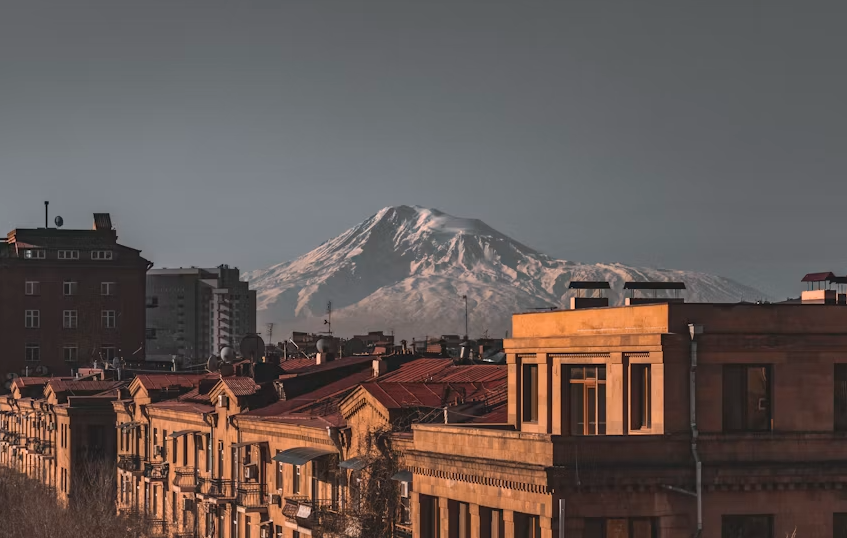
You can’t understand Armenia without first knowing Mount Ararat. Though the snow-topped double peaks of this biblical mountain currently lie on the other side of a closed border in modern-day Turkey, Armenia’s heart beats fastest for this holy peak. Mythological tradition holds that this is the land where Noah’s Ark finally came to rest after the great deluge. To Armenians, the Mountain of Ararat is a symbol of hope and rebirth.
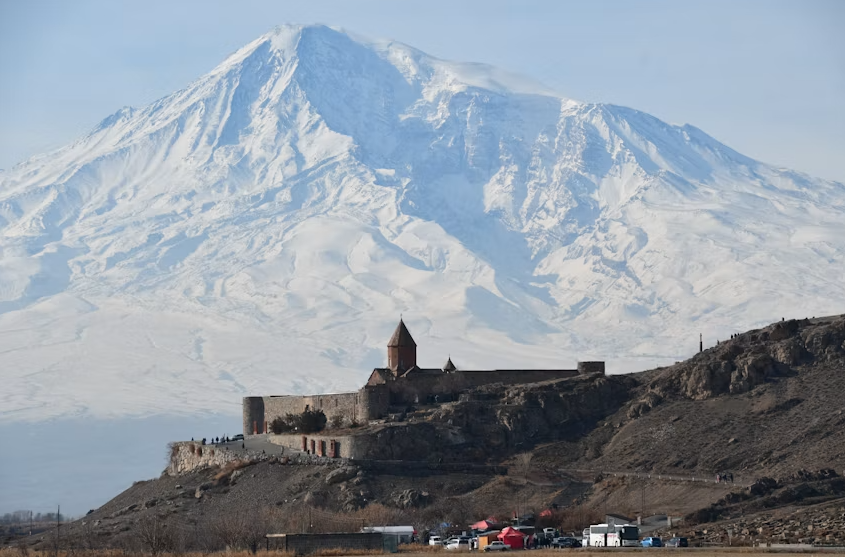
For the best views of this stunning mountain, take a trip to the monastery of Khor Virap. Perched atop a small rocky hill dotted with pastures and vineyards, the monastery of Khor Virap (which means “deep pit”) is a place of great spiritual significance.
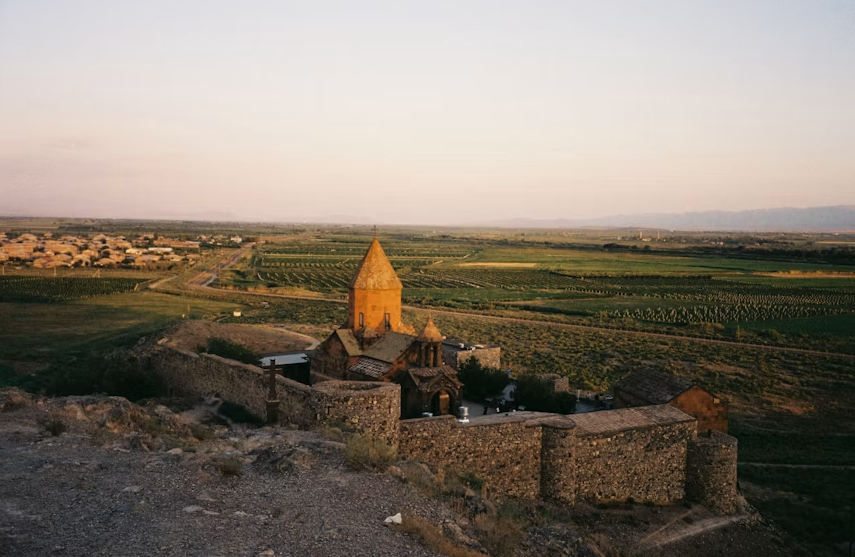
According to legend, in the late 3rd century the pagan king Tiridates III had a Christian preacher named Gregory cast into the deep dungeon here. He was kept in this snake-infested pit for 13 years – and none too happy to be at that, either. Years later King Tiridates fell mysteriously and violently ill. History tells it was the result of madness – he crawled about on all fours like a beast. The king’s sister, however, had dreams that it was Gregory who could cure his ailment. When Gregory was pulled from the dungeon, he miraculouslty healed the sick monarch. Tiridates was so grateful he allowed Gregory to build a cathedral; in 301 AD, Armenia became the first country in the world to adopt Christianity as its state religion.
Carved From Rock and Soaring Wings
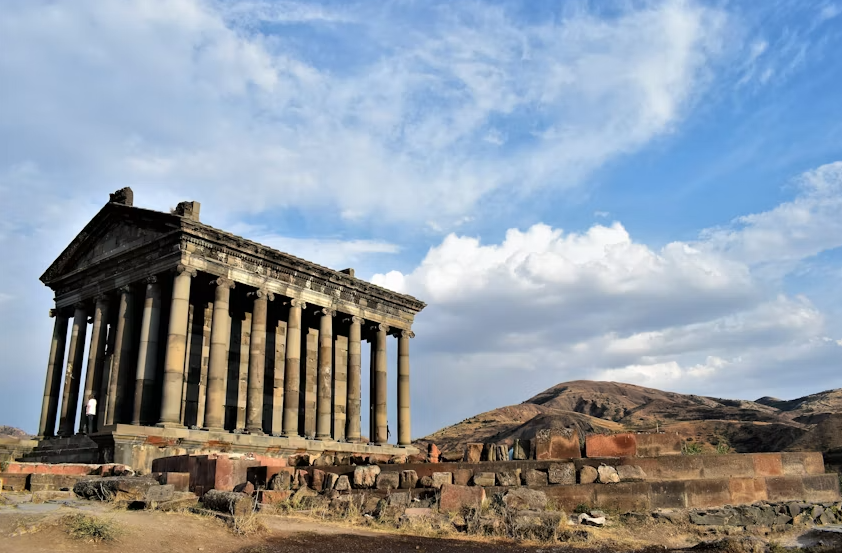
Armenia is an open-air museum of early Christianity, but the pagan past still manages to peek through. Just a short drive from the capital of Yerevan lies the Temple of Garni, a 1st-century structure that soars above a spectacular river gorge. Said to be the only surviving colonnaded building of Greco-Roman style in the entire former Soviet Union, this temple was spared during Armenia’s intense Christianization period thanks to the intervention of the king’s sister. The sister reportedly loved the beauty of the building, and she begged her brother to let her use it as her summer home.
A little further up the gorge leads to an even more fascinating landmark – the cliff-dwelling Geghard Monastery. The upper half of this monastery complex is hewn directly into the rocks. According to local legend, the building was named after the Holy Lance, which was brought from Jerusalem to Armenia by St. Jude.
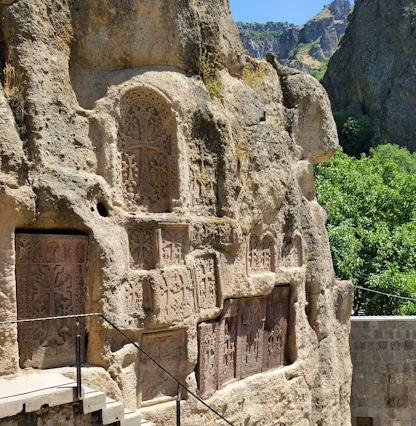
If you stand in the upper chamber where the stone is cut to a natural hollow, and you hum a tune, you can hear the song lingering in the air like some kind of haunted echo.
The Syunik province is home to another fascinating monastery. Perched on the edge of a deep gorge, Tatev Monastery can be reached by way of the “Wings of Tatev,” the longest reversible aerial tramway in the world. The name Tatev was given to this fascinating 9th-century cliff monastery complex from a local legend that tells of a master builder.
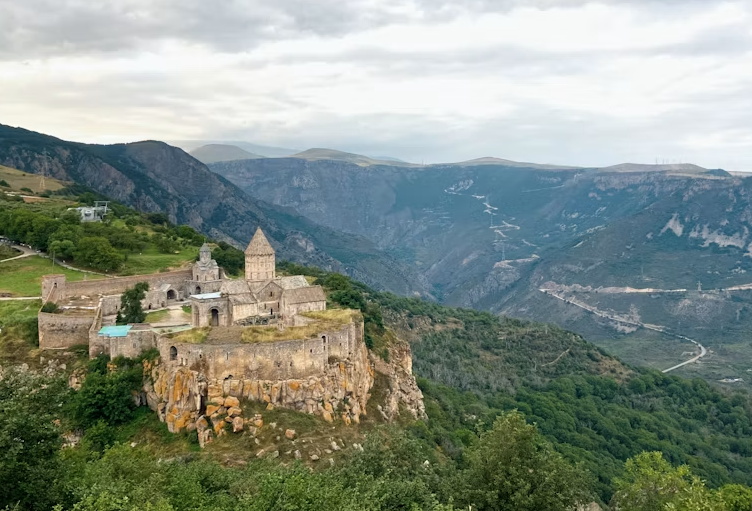
When he finished the construction of the grand cathedral at Tatev, the master builder looked up at the heavens and cried out, “Ognir, Surb, ta tev!” (meaning “Holy Spirit, give me wings”). He then leapt from the edge of the gorge and flew off into the skies. (The spirit must’ve been with him.)
The Red Cliffs And A Master’s Tragic Love
As you head towards the Vayots Dzor province, the landscape turns into a wondrous gorge of vivid red cliffs. Nestled within these red cliffs is a 13th-century monastery that boasts a heart-rending tale as well as an amazing reputation for beauty.
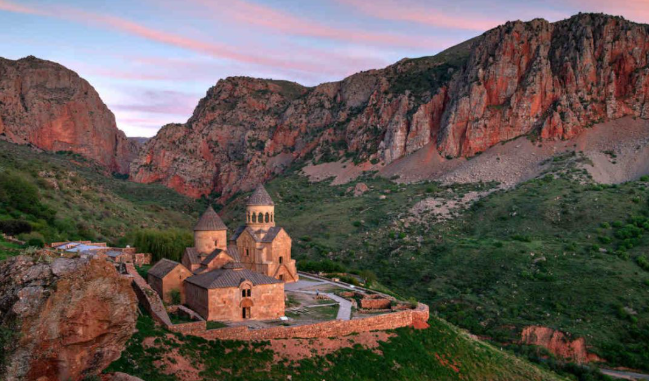
The Noravank monastery was the work of Momik, a master sculptor. It is said that whatever his hands touched was transformed into gold. Local legend has it that the beautiful daughter of Syunik’s Prince captured the heart of young Momik.
When her father discovered the romance, he challenged him to build a church of unmatched splendor. He told Momik that once the building was finished, he could take the maiden as his bride. The architect set to work chiseling out massive blocks of rock. He worked feverishly and finished the project just before the three-year deadline. As the master builder looked over the dome of the cathedral and prepared to finish the last bits of carving, he knew happiness was just hours away.
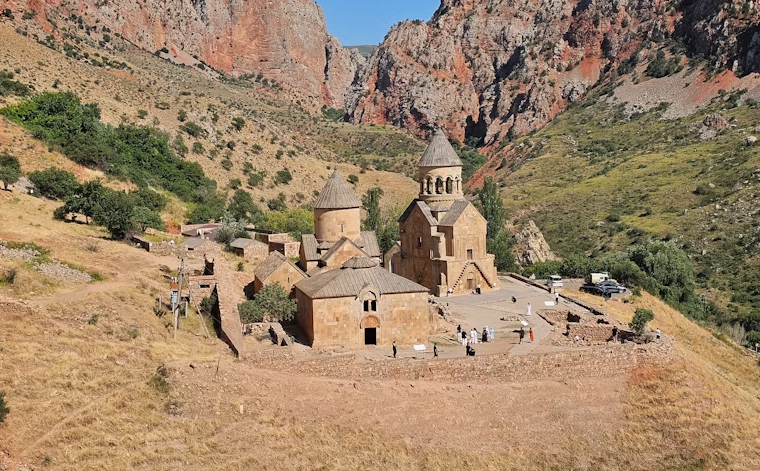
Little did he know that the Prince had other ideas. Just before dawn, a servant climbed the dome and gave Momik a push over the edge – into the depths below. The master builder died, his body landing atop what would become his tombstone, the last carved block of stone he’d placed on the cathedral.
The Mermaid’s Hair Waterfall
Further south in resort town of Jermuk, the land boasts of waterfalls that flow from ancient folklore. Jermuk is famous for its many mineral water springs, including a magnificent 68-meter cascade that plunges into the Arpa River gorge. Rather than a mighty torrent, this falls in delicate little curtains of flowing water over a stair-step of limestone. Locals call this Jermuk Waterfall, but you can also refer to it as the “Mermaid’s Hair.”
According to legends, a beautiful princess once lived in a castle at the edge of the cliffs. Though many rich and powerful princes wished to wed her, the princess’s heart belonged to a poor shepherd’s son down in the valley. Each night the two lovers met secretly; the princess lowered a long rope of her own making from the steep gorge so the young shepherd could climb up and see her.
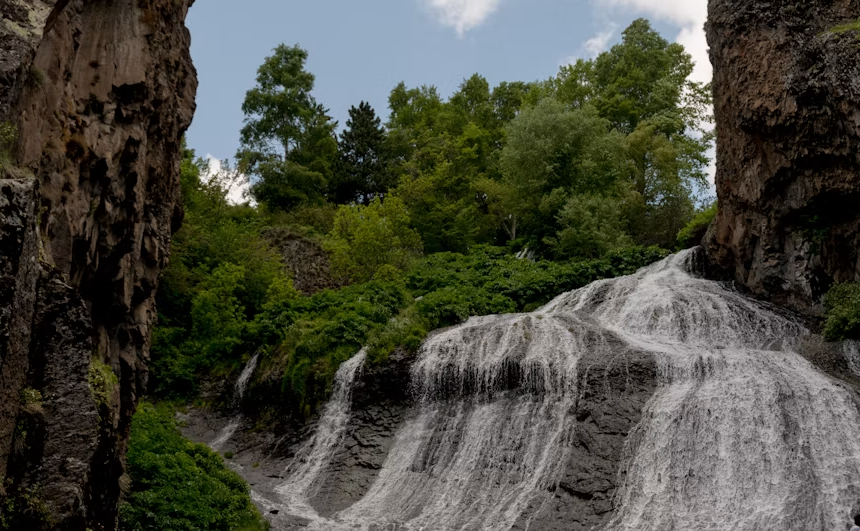
One night, the princess’s father caught sight of the pair. Horrified and insulted, he cursed his daughter, saying that if she ever tried to see the shepherd’s son again – she would become a mermaid! That night her father took all the ropes away, but nothing could break the determined lovers.
The princess leaned over the side and let down her impossibly long beautiful hair for the shepherd’s son to climb. The next night the waterfall became known as the Mermaid’s Hair, taking the place of the long rope the princess had made.
Weeping Peaks and the Blue Pearl
The natural wonders of Armenia take their share of myths with them. Take the mountain of Aragats, the highest peak within the boundaries of Armenia. Local legends say that the twin brothers Ararat and Aragats had fallen out with each other – and with cruel results.
While Ararat was gifted with the beauty of height, Aragats was cursed to always be torn from his brother. This mountain is said to weep constantly for the loss of its brother, and the tears from the weeping giant are responsible for the icy springs that dot the valleys below.
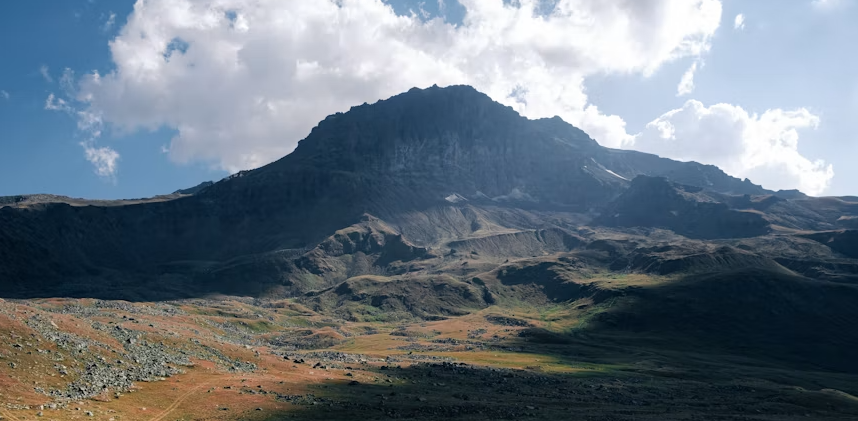
Lake Sevan is a massive body of water; at nearly 2,000 meters above sea level it is also the highest peak lake in the region. Known locally as the “Blue Pearl of Armenia,” the jewel-toned Lake Sevan is said to possess some interesting powers. The lake’s waters magically shift from deep turquoise at mid-day to glimmering gold at dusk.
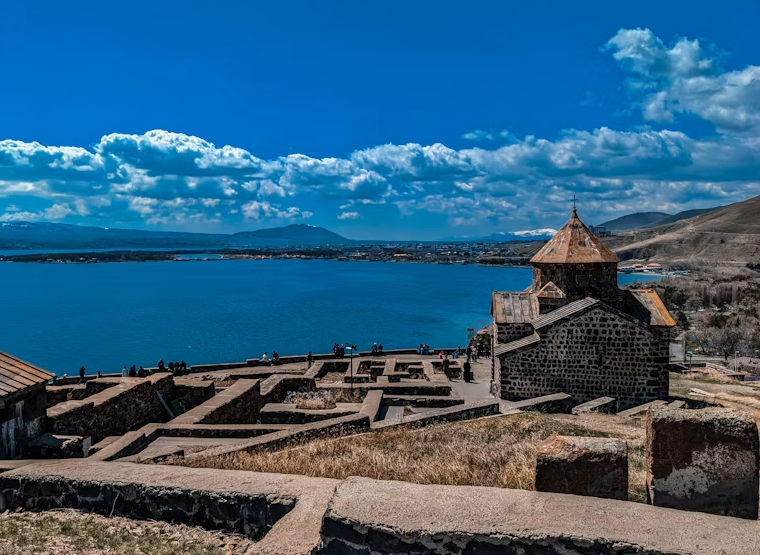
According to a local legend, one day a young village girl fetched water from the spring but forgot to stop the magical stream that came from it. All night the waters ran and flooded the valley, drowning the fields and taking shape of a lake.
A Culinary Heritage Forged In Fire
Armenian culture revolves around the table. Food in this region is taken most seriously, and it’s seen as a way to express deep hospitality as well as preserve their ancient traditions.
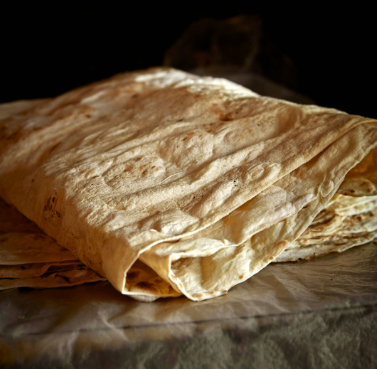
Lavash, a paper-thin flatbread made by slapping the dough against the scorching walls of an underground clay oven called a tonir, makes for the most basic of Armenian meals. As the master bakes rolls the finished flatbread, he makes a cross out of water on its surface – a blessing for prosperity.
Harissa is the national dish of Armenia, a hearty porridge of dried wheat and lamb or chicken. It is said to have been invented by St. Gregory when he was cooking a great feast for the poor. When he ran out of meat to toss in the pot, he tossed in handfuls of wheat and shouted “harekh!” (meaning “to stir”) to keep the mixture from burning.

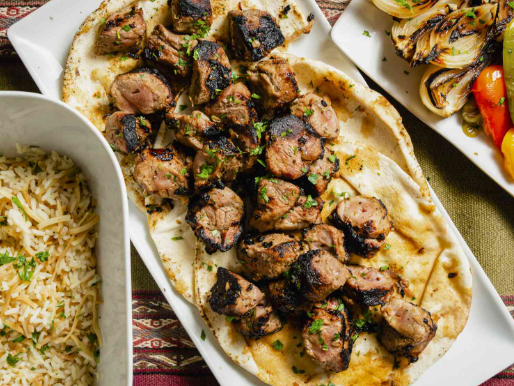
Khorovats, or Armenian barbecue, will always be served to guests, providing an opportunity to pour out local pomegranate wine and give eloquent toasts to life, parents, and peace.
When you visit Armenia, you’ll find that the real monument to its spirit isn’t something carved in old stone. It is the genuine warmth of the people. Whether you’re walking the red canyons of Noravank or taking in the sights of a weeping waterfall, you are always welcomed into a living, breathing story.