Travel Paris with UnCrushedLeaves

Paris isn’t merely an archeological dig of penguin-pale buildings frozen in time and veiled in velvet ropes. It’s a thick soufflé of smog and stone and buttery croissants baked fresh each morning, a city that doesn’t just live alongside its glorious history but dances with it, waltzing through centuries of ghosts, and you know what? You’re not going to really understand the place unless you let it tell its story in between the cracks of the cobblestone streets.
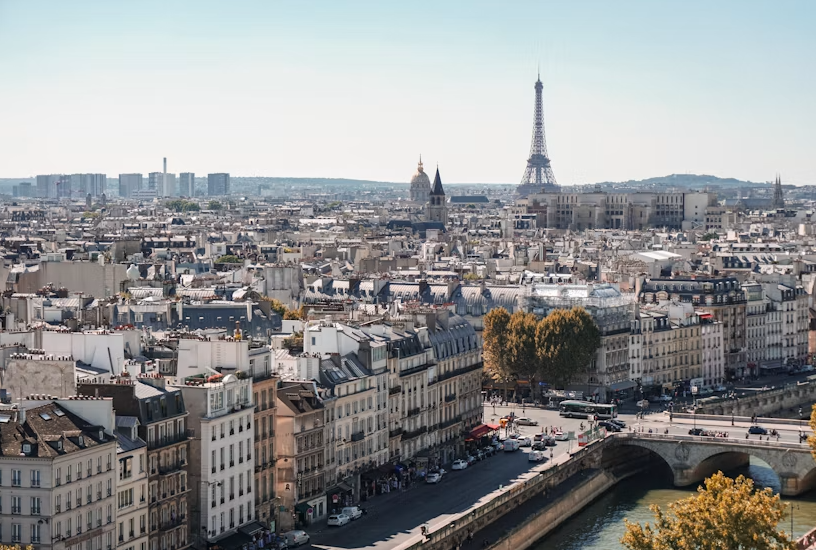
So when you first exit the train or the airport, you’ll be overwhelmed by the sheer density of it, the sprawl of gray zinc rooftops and Haussmann-era buildings that guard Paris’ guarded secrets. It’s hard to believe this all used to be a village, because Paris really is an onion – every time you think you’ve experienced the layers, you peel another back and find something else entirely. It is stunning, yes, and in the best of Paris’ boulevards you’ll find beauty in every shadow, but also, frequently, the grittiest of underbellies. It’s traditional and it’s turbulent, and it’s both at once.
An Iron Lady’s Rough Start
Case in point: The Eiffel Tower. Sure, today it’s Paris’ glittering heart, attracting the lonely from all corners of the earth to marvel at its twinkling lights for five magical minutes after sunset. But when it was first unveiled at the 1889 World’s Fair, the locals nearly pulled it down.
France’s artistic and intellectual elite flocked together in one indignant, ink-smeared paragraph to condemn this “tragic street lamp” and “gigantic black smokestack.” They were so reviled they apparently never forgave themselves, for decades later – when the tower was slated for demolition and the scrap metal dealers were already talking to Gustave Eiffel – the famous writer Guy de Maupassant could be seen having lunch in the second-floor restaurant of the monument everyday. When asked why, he muttered something about being the only place in Paris where you could see the tower, and not have to look upon it.
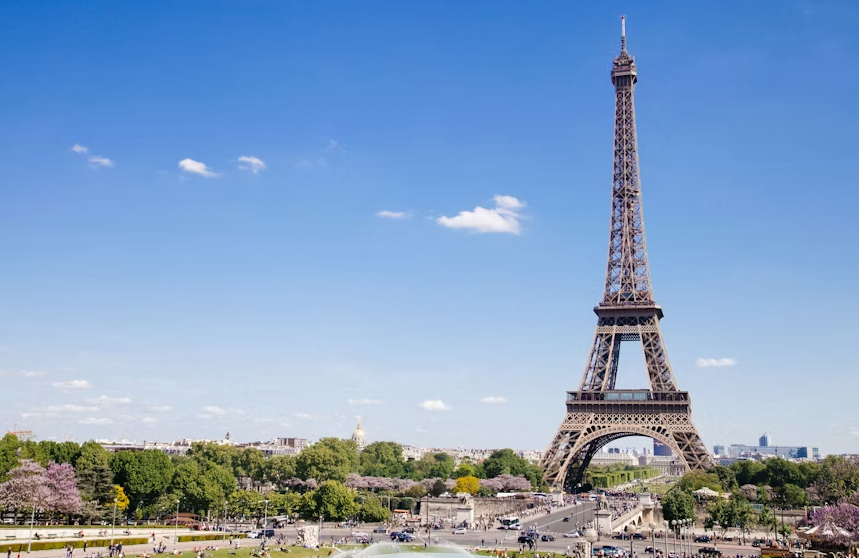
Gustave Eiffel, the architect behind the tower, well, he knew that opinion was out there. So he did what any rational man would at that time: he bought a luxury apartment at the very top. Furnished with patterned wallpaper, wood paneling and a grand piano, the only people it saw were the likes of Thomas Edison and other social elite – because nobody wanted to sleep in the “iron monster” and they’d pay any amount of money to stay there.
The tower was meant to be temporary, to stand proud for only 20 years.
History tells us that it was saved twice by World War I, once because its height made it a perfect spot for a military radio antenna, and again because Eiffel kept the scrap metal price low enough that it was still cheaper to tear it down and sell it for parts. That is, until the German cannons could see it from the horizon.
But let’s leave the Iron Lady for now, and follow the Seine towards the center of Paris, where this city’s beating heart lies.
Notre-Dame and the Power of A Story
Here, on the island of the Cite, stands the one of the truest Parisian icons: Notre-Dame Cathedral. While the Eiffel Tower is the modern face of France, this is the old soul of Paris, gazing upon the streets in a motherly, stone gaze.
Contrary to popular belief, the cathedral was, until the 19th century, a crumbling ruin. Its statues were decapitated by revolutionaries, its halls haunted by stories of being stored in during WWI, and its future seemed bleak. Until – in a twist of fate only fit for Paris – the famed writer Victor Hugo emerged from the shadows and, in his own self-proclaimed right, saved it.
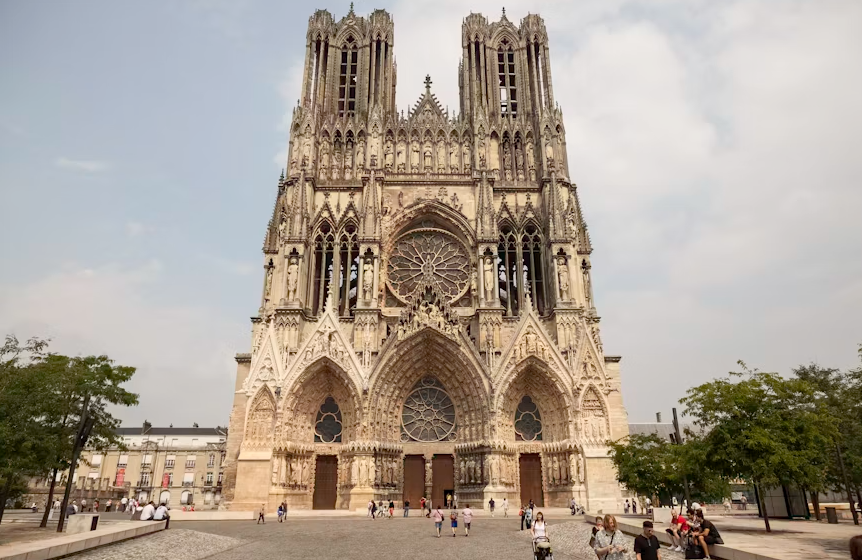
Hugo wrote The Hunchback of Notre-Dame in 1831, a sweeping Gothic romance that happened to gush over the cathedral for 500 pages. The public, it seems, fell in love with the cathedral’s soul, and from that love came the money to restore it. Interestingly enough, the very gargoyles and chimeras that look over the cathedral are not actually medieval, but rather were added in the 19th century by author-architect Eugene Viollet-le-Duc. They’re among Paris’ most beloved and photographed landmarks, and though they had nothing to do with the writing that saved it, they did play a part in the 19th-century restoration.
Speaking of interesting landmarks and their long, winding love stories with Paris, let’s talk about the green boxes outside bookstores.
The River of Time and the Green Boxes
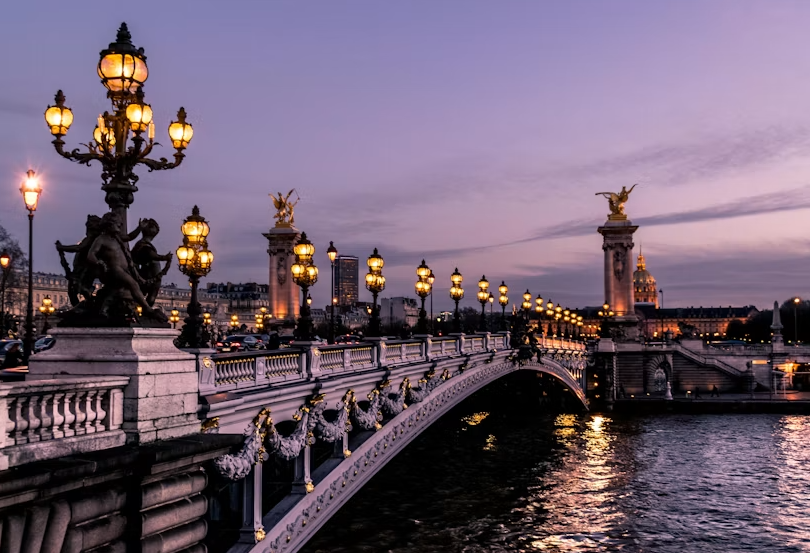
As soon we reach the Seine, we might as well follow our instincts and take in Paris from the water. The river is the lifeblood of the city, dividing its into the Left Bank – heavy with artists and thinkers – and the Right Bank, home to the wealthy and powerful. This stretch of water is so important to Paris that they even named a bridge after it: the Pont Neuf, or New Bridge, which is in fact the oldest bridge in Paris still standing.
The New Bridge is also notable for being the first to have no mansions on it, and thus for the first time, the people of Paris could see the Seine as it was, without the eyes of nobility watching them. But our focus should be on the tiny bookstores lining the Seine’s edges, their wooden boxes painted green and stacked high along the stone parapets.
These are the bouquinistes, Paris’ famed booksellers, and the boxes belong to them. Classed as a UNESCO World Heritage Site, there’s a lovely little ecosystem along the river that you ought to know. With over 200 booksellers hawking their wares along the Seine, these traders have been around since the 16th century when traveling merchants set up these very same square stalls. You’ll find original books, comics, maps and souvenirs inside, but it’s not a real bookstore, more of a book bazaar. Today, the bouquinistes are thought to have the largest open-air bookshop in the world (and possibly the universe). Browse the boxes on a cool fall afternoon and you’ll be rewarded with stories of every kind, hidden only by the veil of water.
The Louvre: From Medieval Fortress to Glass Pyramid
Just a short walk from the river stands the Louvre, the world’s most-visited art museum. But the building’s architecture tells the story of French history over eight centuries. It wasn’t built to house paintings; in the 12th century, King Philip II Augustus built it as a heavily fortified defensive castle to protect Paris from Viking invasions. If you venture into the museum’s basement today, you can still walk through the excavated, dark stone foundations of that original medieval keep.
By the 16th century, the fortress was transformed into a lavish Renaissance palace for the French monarchy. When King Louis XIV moved the royal court to Versailles in 1682, the vast halls of the Louvre were left to house the royal art collection. It wasn’t until the chaos of the French Revolution that the National Assembly decreed it should be a public museum, officially opening its doors in 1793.
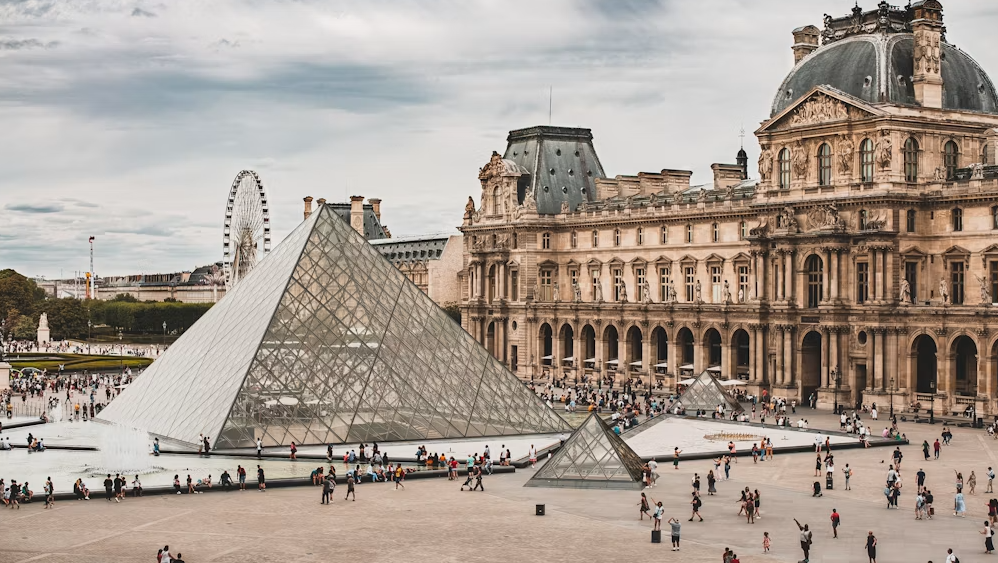
In 1989, the museum underwent its most controversial transformation with the addition of the 21-meter glass and metal pyramid designed by I.M. Pei. Much like the Eiffel Tower a century earlier, Parisians initially despised the modern structure clashing with the classic French Renaissance architecture. Today, it serves as the iconic main entrance, bringing natural light into the vast underground lobbies.
A Collection of Immense Scale
The sheer size of the Louvre is difficult to comprehend. The complex contains roughly 35,000 works of art on display across 72,000 square meters. If you spent just 30 seconds looking at every piece on display, it would take you 100 straight days to see it all.
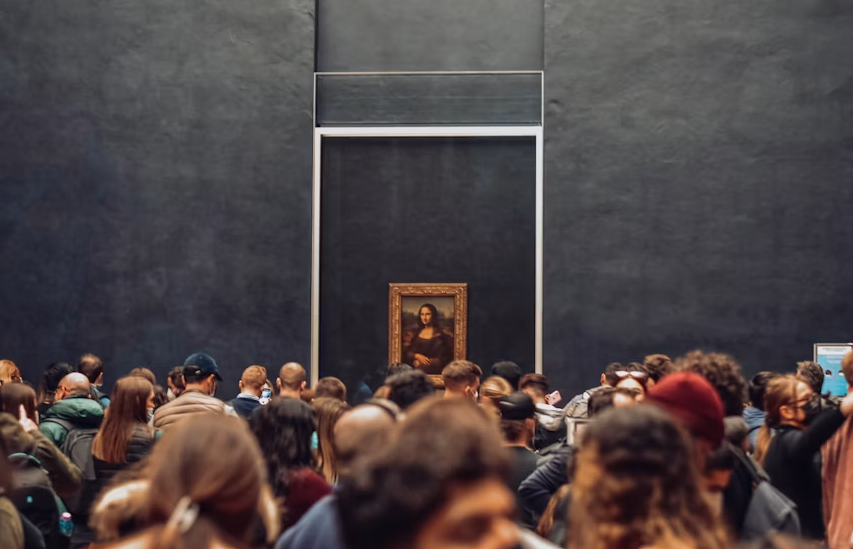
While millions flock to see Leonardo da Vinci’s Mona Lisa—a painting that arguably only became a global icon after an Italian handyman famously stole it from the museum in 1911—the true magic of the Louvre lies in its vast, diverse collections.
The Rules of the Parisian Table
You know what they say about the French: food is more important than love, and the café is the city’s living room.
Notice how the chairs in a Parisian café are always placed to face outwards, and each other, side by side, rather than across from each other. The waiters, adorned in their tall white caps and black aprons, are not sad people. They’re professionals, and as such they do have a code. Tourists always find it perplexing, because to an American waiter, it would be rude to not inquire as to how your meal is, and to hurry you out the door as soon as the plate is cleared.
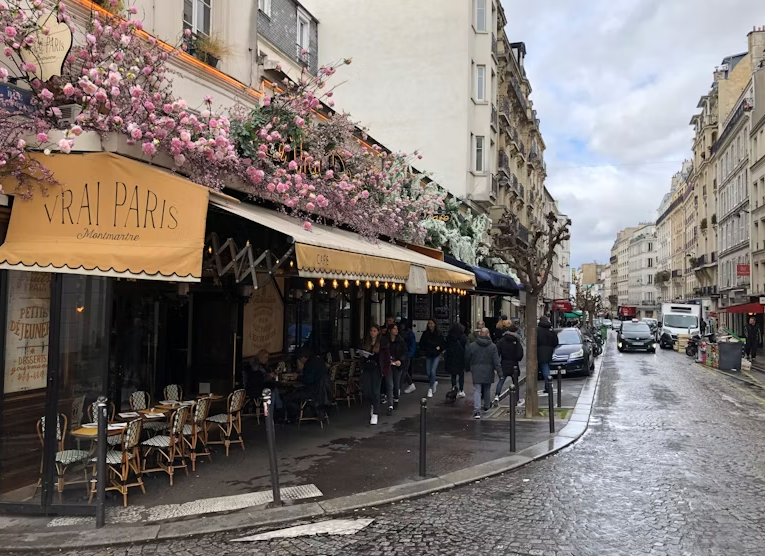
The French, meanwhile, don’t really care how you’re doing, but they do care that you don’t block their way. In their eyes, your table is your domain, and they will not enter it unless you allow them. In the US, a waiter will come by and ask how everything is ten times in an hour. In Paris, they’ll come by once to take your order and that is it. You can sit at that table for three hours with a cup of coffee and a novel and they will not bother you, but be sure to ask for the bill when you want to go because they will not bring it to you.
You don’t need a fine dining experience to eat well in Paris, but you do need a boulangerie.
Paris is serious about its bread. The law says a baguette can have only four ingredients – wheat flour, water, salt, yeast – and that it cannot be frozen or have any preservatives. Every year, the city hosts a “Grand Prix” to determine the single best baguettier in the city, and the winning bakery will get to make baguettes for the President of France for a year, at the Élysée Palace. The true baguette should never be soft, but shatter on impact, spraying crumbs and buttery essence liberally onto whatever you’re wearing to give it a rich taste and a lasting memory. And paired with a croissant that shatters into golden, flaky crumbs, the Parisian breakfast is something to behold.
That is not to say that you should restrict yourself to a Parisian breakfast, or to the cloying, bustling, nonsensical streets of the center. Far from it.
To see Paris, you have to see it in all its glory, and that means getting lost. The truest emotion you can have in Paris is surprise.
The French word for walking around with no real plan, for simply wandering up and down the street gazing in wonder and poking your head into odd shops, is flâneur. That is the best way to see Paris, and if you decide to go this route, you’ll likely have the city to yourself. Because, quite frankly, it’s exhausting to do what the Parisians do. But you can get some fresh air and eat a croissant at a little bistro in a provincial village and watch the world go by just the same.
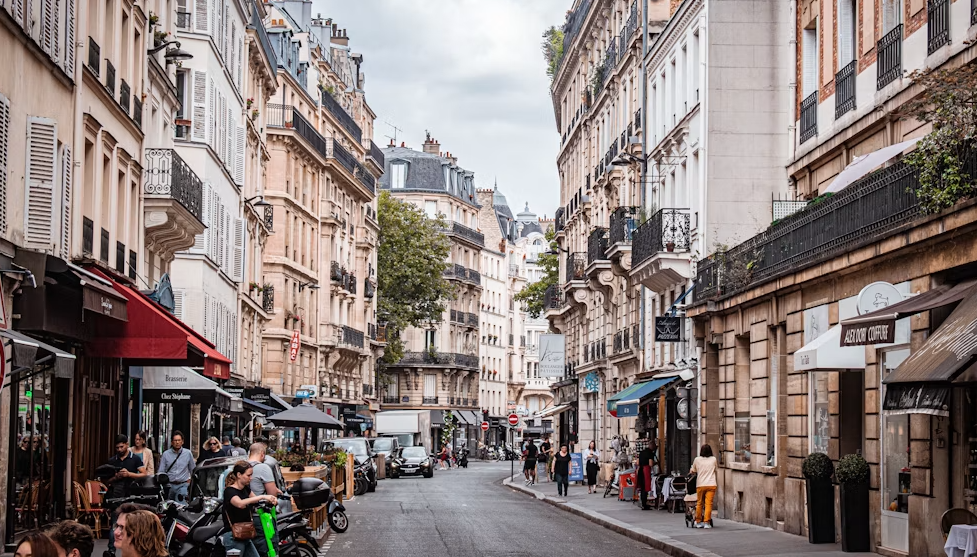
No matter what you do while you’re in Paris, do not, I repeat do not, get into the habit of hurrying around from one attraction to the next. Paris is not a souk, it does not thrive on numbers. If you spend your time running from the Eiffel Tower to the Louvre to the Arc de Triomphe, you will see none of these places, because you will be in a constant hurry. To really understand this fair city, you need to slow down, and smell the baguettes.